
Quick plug for my friends Jeffrey and Cole also known by their YouTube moniker: VGL Gay Boys. I can't figure out which one is Rowan and which is Martin. Or is it which one is Martin and which one is Lewis? Or maybe which one is Lewis and which one is Clark? In any event, they are hilarious. They are writing a new column for HX magazine-the New York gay rag- and have some live dates coming up. The info is posted below, as is one of their hilarious videos. For an added chuckle I'm also posting the Golden Girls Parody we made together. Check them out:
TWO NIGHTS ONLY at the D-Lounge,
at the Daryl Roth Theater in Union Square!
JULY 31st at 10PM
AUGUST 7th at 10PM
Directed by Christian Coulson
Musical Direction by Michael Arden, the bartender
Featuring a SURPRISE CELEBRITY GUEST!
Tickets are $5 at the door
(no drink minimum but a full bar!)
For info and reservations email VGLGAYBOYS@gmail.com
Showing posts with label Theatre. Show all posts
Showing posts with label Theatre. Show all posts
Friday, July 25, 2008


Wednesday, July 23, 2008
I'm a New Old Gay!
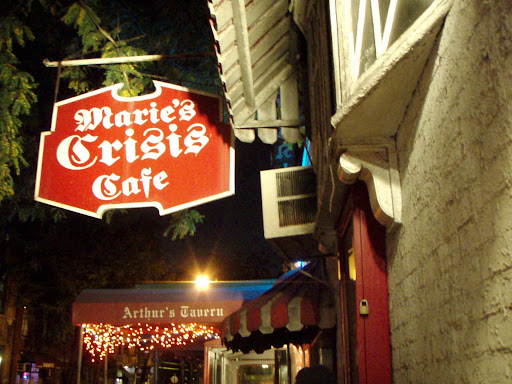
I'm a "New Old Gay!"-and proud of it. Check out this great article from the New York Observer....every word of it is true. Marie's Crisis WAS the first piano I ever visited. Money Quote:
To be classified as a New Old Gay requires more than an appreciation of Patti LuPone, though love of somewhat tragic, just a tad grotesque, totally fabulous divas is a requirement. In some ways the New Old Gay can be read as a reassertion of a gay identity that had all but been given up for dead: If gays can be married and have children and live contentedly in the suburbs, or on the other end of the spectrum, do the same drugs at the same loft parties as their Oberlin classmates, and if everyone thinks AIDS is no more serious than diabetes, then, really, what’s the difference between the gays and the straights? By dialing back to and reinventing the old gay stereotypes, they may have the best shot at reclaiming gayness as something actually different.
Tuesday, January 15, 2008
No Day But Today....
If my generation has a musical, and (I'm afraid to say) it probably doesn't, it's RENT. So though it's had a remarkable long run at the Nederlander Theatre on Broadway I couldn't help but be saddened by the news that it's time has finally come. My favorite memory of the show: Algebra class Freshman year of high school. Sitting in front of me was BJ, a large somewhat effeminate black boy. Day after day instead of paying attention to mathematrical proofs and the quadratic equation BJ would teach me the lyrics to Rent's showstopping Act-One closer: La Vie Boheme. It would be two years before I saw the show on Broadway but, by the time I did, I already knew the whole thing by heart. Goodbye Rent, we'll miss you!
Monday, December 17, 2007
Sondheim: Follies (1971)
It could never happen again. It should have never happened at the time. The unbelievably extravagant, exceedingly expensive and ridiculously ambitious 1971 musical Follies was a musical perhaps doomed to failure. Shockingly downbeat, Follies marked the end of a Broadway that sparkled with glamour and fantasy, ushering in a new area of cynicism and modernity. It was another experiement in creating a whole new kind of musical. Follies began in the mind of Stephen Sondheim as a murder mystery called "The Girls Upstairs." After much reworking, and with Hal Prince's guiding hand, the show transformed into a massive eulogy for youth, hope and old "42nd Street" showbiz. Inspired by a startling photograph of Gloria Swanson amid the wreckage of an abandoned, dilapidated theatre, Follies is set at the first, and last, reunion party for Weissman's Follies (a transparent Ziegfield stand-in) before the old theatre gets torn down. As one character barbs, "Just what this city needs, another parking lot." Specifically focusing on two middle-aged former Follies girls and their stage-door Johnny husbands, (Sally and Buddy, Phyllis and Ben, respectively) we are invited to luxuriate in the destructive dynamics and long stewing resentments of two collapsing marriages. Old romances are rekindled (and discarded); hopes for the future are shown futile. Through the metaphors of show-biz, these domestic dramas are elevated into the more universal crisis of age and loss. A true concept musical, the action plays on a dream stage where the ghosts of the past literally share space with the harsh realities of the present.
There are two kinds of music in Follies. Most transparent are the pastiche; songs written deliberately in the manner of the tin pan alley tunesmiths of the 20's and 30's. The other songs are uniquely Sondheim-esque and contemporary. All are brilliant. In Follies Sondheim was able to display his complete mastery of theatre music, tossing off Irving Berlin and George Gershwin homages that often outdid their real inspirations. Better yet, Sondheim's lyrics in these pastiche numbers worked on two levels: they are fully believable as period pieces and they also subtly comment on the action, providing discomfiting irony to each musical moment. No where is this more obvious than in the Act-one showstopper "Who's that Woman." As the aging chorus girls sing a cheery bouncy dance number, the lyrics cut to the quick. "Who's that woman?/That cheery, weary woman/Who's dressing for yet one more spree?/Each day I see her pass/In my looking-glass--/Lord, Lord, Lord, that woman is me! " As they dance with their old selves, the ladies "mirror" image becomes all the more poignant-their feeble attempt at dancing more pathetic. Even the grand opening, a parody of Irving Berlin's Follies classic "A Pretty Girl" called "Beautiful Girls" has a more than subtle hint of the pathetic and grotesque to it,-as all the old, wrinkled, heavy and frail former Follies girls parade down the staircase one last time, nostalgia quickly transforms to sadness and disgust.
Eventually the regrets and recriminations of the the four main characters comes to a head, boiling over and transforming the stage into a new and one-of-a-kind show; a full-fledged Follies of psychological dysfunction and released repression. As each of the main characters has their moment in the spotlight the futility of the entire endeavor becomes more and more obvious. Eventually invoking a nervous collapse from Ben, the stage becomes awash in a cacophony of noise-all the characters bellowing while the orchestra thrashes in a nonsenical din. Leaving the party with the spouses they came with, the characters may leave wiser for the wear-but happiness remains nonetheless an elusive dream.
A massive cast, an incredible orchestra, costumes opulent beyond any seen since--Follies was one of the most expensive shows Broadway had ever seen. All this to service a show that, as described above, leaves it's audience less than joyful. The critics that disliked the show focused on Williams Goldman's book which they saw as petty. Why would anyone want to spend an evening with these four sad pathetic people who spend a whole show complaining and bitching with each other about events long since passed? The point is not without insight but what those critics missed is the more universal and powerful thematic ideas facilitated by this plot. No, the characters don't really change or grow, but that is, of course, the point. Sondheim and Price simply weren't interested in playing by the rules. The shows most insightful review was written by a Harvard student, a precocious young fellow named Frank Rich. He had already written his place in the history of criticism with a line that epitomized Follies raison d'etre: "There is no getting around the fact, that a large part of the chilling fascination of `Follies' is that its creators are in essence presenting their own funeral."
Follies did not recoup it's invest despite a run of 522 performances on Broadway. A National tour also fizzled early. Ever since, the show has achieved a legendary status, not only for the brilliance of it's score but for the perfection and unattainable opulence of the original production. Chronicled in the book "Everything Was Possible" by Ted Chapin, the history of Follies is mythic among theatre aficionados and for good reason. But this has not stopped people from attempting to remount the show and make it a viable entertainment once again. A star-studded 1985 concert with Mandy Patinkin, Barbara Cook, George Hearn and Lee Remick cemented Follies status as one of the most brilliant scores in Broadway history. The 1998 Paper Mill Playhouse Production dared to ask if a fully mounted revival could succeed. The answer seemed to be a resounding "yes!" Critic swooned. When an slimmed down revival appeared on Broadway in 2001, the results were underwhelming. Once again Follies proved a classic problem play, unrelentingly interesting but stubbornly unproducable. The recent critical and commercial success of another concert staging, this time at City Center Encores, stirred up discussions of yet another possible try for Broadway gold-but so far no official word has confirmed the chatter.
And probably for the best. Follies will never be a commercial success; it's subject matter too bleak, it's financial demands too great. In a concert staging, pressures are lessened and the imagination takes hold, closing the gaps that a real production would have to fill. For those who saw it, memories of the original persist. For those who didn't, like Bobofag, the idea of a fully realized Follies is probably better than the real thing. Follies remains a frustrating, sad, dark and numbingly brilliant musical, all the more enticing for it's many flaws. It's unrealistic demands of production and it's taxing emotional experience for the audience make Follies better imagined than real. Like a young child staring at his beautifully wrapped Christmas gift, the toy itself can never quite live up to the anticipation.
There are two kinds of music in Follies. Most transparent are the pastiche; songs written deliberately in the manner of the tin pan alley tunesmiths of the 20's and 30's. The other songs are uniquely Sondheim-esque and contemporary. All are brilliant. In Follies Sondheim was able to display his complete mastery of theatre music, tossing off Irving Berlin and George Gershwin homages that often outdid their real inspirations. Better yet, Sondheim's lyrics in these pastiche numbers worked on two levels: they are fully believable as period pieces and they also subtly comment on the action, providing discomfiting irony to each musical moment. No where is this more obvious than in the Act-one showstopper "Who's that Woman." As the aging chorus girls sing a cheery bouncy dance number, the lyrics cut to the quick. "Who's that woman?/That cheery, weary woman/Who's dressing for yet one more spree?/Each day I see her pass/In my looking-glass--/Lord, Lord, Lord, that woman is me! " As they dance with their old selves, the ladies "mirror" image becomes all the more poignant-their feeble attempt at dancing more pathetic. Even the grand opening, a parody of Irving Berlin's Follies classic "A Pretty Girl" called "Beautiful Girls" has a more than subtle hint of the pathetic and grotesque to it,-as all the old, wrinkled, heavy and frail former Follies girls parade down the staircase one last time, nostalgia quickly transforms to sadness and disgust.
Eventually the regrets and recriminations of the the four main characters comes to a head, boiling over and transforming the stage into a new and one-of-a-kind show; a full-fledged Follies of psychological dysfunction and released repression. As each of the main characters has their moment in the spotlight the futility of the entire endeavor becomes more and more obvious. Eventually invoking a nervous collapse from Ben, the stage becomes awash in a cacophony of noise-all the characters bellowing while the orchestra thrashes in a nonsenical din. Leaving the party with the spouses they came with, the characters may leave wiser for the wear-but happiness remains nonetheless an elusive dream.
A massive cast, an incredible orchestra, costumes opulent beyond any seen since--Follies was one of the most expensive shows Broadway had ever seen. All this to service a show that, as described above, leaves it's audience less than joyful. The critics that disliked the show focused on Williams Goldman's book which they saw as petty. Why would anyone want to spend an evening with these four sad pathetic people who spend a whole show complaining and bitching with each other about events long since passed? The point is not without insight but what those critics missed is the more universal and powerful thematic ideas facilitated by this plot. No, the characters don't really change or grow, but that is, of course, the point. Sondheim and Price simply weren't interested in playing by the rules. The shows most insightful review was written by a Harvard student, a precocious young fellow named Frank Rich. He had already written his place in the history of criticism with a line that epitomized Follies raison d'etre: "There is no getting around the fact, that a large part of the chilling fascination of `Follies' is that its creators are in essence presenting their own funeral."
Follies did not recoup it's invest despite a run of 522 performances on Broadway. A National tour also fizzled early. Ever since, the show has achieved a legendary status, not only for the brilliance of it's score but for the perfection and unattainable opulence of the original production. Chronicled in the book "Everything Was Possible" by Ted Chapin, the history of Follies is mythic among theatre aficionados and for good reason. But this has not stopped people from attempting to remount the show and make it a viable entertainment once again. A star-studded 1985 concert with Mandy Patinkin, Barbara Cook, George Hearn and Lee Remick cemented Follies status as one of the most brilliant scores in Broadway history. The 1998 Paper Mill Playhouse Production dared to ask if a fully mounted revival could succeed. The answer seemed to be a resounding "yes!" Critic swooned. When an slimmed down revival appeared on Broadway in 2001, the results were underwhelming. Once again Follies proved a classic problem play, unrelentingly interesting but stubbornly unproducable. The recent critical and commercial success of another concert staging, this time at City Center Encores, stirred up discussions of yet another possible try for Broadway gold-but so far no official word has confirmed the chatter.
And probably for the best. Follies will never be a commercial success; it's subject matter too bleak, it's financial demands too great. In a concert staging, pressures are lessened and the imagination takes hold, closing the gaps that a real production would have to fill. For those who saw it, memories of the original persist. For those who didn't, like Bobofag, the idea of a fully realized Follies is probably better than the real thing. Follies remains a frustrating, sad, dark and numbingly brilliant musical, all the more enticing for it's many flaws. It's unrealistic demands of production and it's taxing emotional experience for the audience make Follies better imagined than real. Like a young child staring at his beautifully wrapped Christmas gift, the toy itself can never quite live up to the anticipation.
Wednesday, November 28, 2007
Gypsy, back to Broadway.

After her smash success at City Center Encores the brassy and inimitable Patti LuPone is headed to Broadway in the role everyone says she was born to play, Mama Rose in Gypsy. It's a risky move. The last revival on Broadway starring a cast against type Bernadette Peters was hardly a smash and despite being a Broadway star LuPone's name is far less marketable for the tourist hoi polloi. Buoyed no doubt by mostly rave reviews for it's star, save a notable exception by the Times' Ben Brantley, Gypsy will grace the Great White for it's fifth incarnation the fourth of which premiered within this decade. Having seen both LuPone and Peters (but none of the other Broadway Mamas) I can assertively say that Peters gave the more memorable interpretation. LuPone sang the role with more gusto and panache then anyone since the Merm herself (in fact, LuPone's Broadway outing necessitates a new cast album-the first must-have recording since the original) but her acting in the book scenes sometimes fell flat. I felt her deadpan Mrs. Lovett, a delicious creation for that shows aesthetic, was bleeding over into her Mama. Peters wasn't wholly satisfying as Mama either, perhaps pushing the character too far into vulnerability. At times Peters appeared adrift in her songs, flailing her arms with unfocused emotion and straining for notes. But, the specificity and originality of Bernadette eventually won me over, the performances flaws being an unchangeable extension of the vary aspects of the performance that I enjoyed. There was some Schadenfreude in the theatre community towards Bernadette for missing many performances (especially early on) and for getting the part over Patti LuPone in the first place. This climaxed in the shocking win of Marisa Janet Winokour for the Tony prompting Bernadette to, rumor has it, walk out of the ceremony before it was finished. With Patti, it's all love all the time. Well, Gypsy is more than it's star and the production staged this past summer definitely needs some sprucing up before it can play the Great White Way. The sets, staging and costumes of the City Center production were redolent of summer stock and although it featured two amazing supporting actors as Lousia and Herbie (Laura Benanti and Boyd Gaines respectively) other cast members did not fair as well. Worst of all was director, and bitchy queen for the ages (I think he's a musical theatre legend but, let's be honest here!), Arthur Laurents' unceremonious comments about Sam Mendes' direction of the Bernadette revival. These were particularly egregious since, from a directorial point of view, Mendes' production was far superior and polished. While Gypsy was never the kind of show prone to conceptual re-imagining (like Cabaret was), Mendes nevertheless cleaned up and made fresh this old warhorse for the 21st century. His touches were subtle but exceedingly missed this past summer. Still, I hope the show does well (it's perhaps the greatest musical ever) and garners LuPone her second Tony, which given her reception the night I saw the show, should be no problem for the diva. As for me, I am just thrilled to buy the cast album. Here is some back to back Rose...you pick your own favorite.
Wednesday, November 14, 2007
Sondheim: Anyone Can Whistle (1964)

What comes up, must come down. Sondheim's biggest flop was the 1964 musical, "Anyone Can Whistle." It served as the last new collaboration between book writer Arthur Laurents( of "Gypsy" fame) and Stephen Sondheim and the first collaboration between Sondheim and Angela Lansbury (making her, ironically inauspicious, stage musical debut). An original story by Laurents focused on a financially depressed town and how it's corrupt mayor (Angela Lansbury) fakes a miracle-a rock that springs water- to attract tourists and rescue the town. The show received terrible reviews in it's Philadelphia out-of-town try-out. Though somewhat revised for Broadway by Arthur Laurents the changes were not enough. The show closed after nine performances.
Despite it's total commercial failure, many of the songs have entered the popular Sondheim repertoire. The emotional ambiguity that would help define him as a composer is first evident in "Whistle's" classic tunes. Though it was cut from the final production, "They're Won't Be Trumpets" has become an exciting cabaret and concert staple. Of the songs in the show, "Everybody Says Don't" and, most of all, "Anyone Can Whistle" itself are pure classics. The lyrics to the shows titular number are amongst the the most personal ever written by Sondheim. "What's hard come simple/What's natural comes hard./Maybe you could show me/how to let go/lower my guard/Learn to be free./Maybe if you Whistle/Whistle for me."
I, in fact, have never seen the show live and, along with many Sondheim fans I suspect, think of the show as the most mysterious entry in his oeuvre. The musical received some redemption when it was revived for a Carnegie Hall concert in 1995 starring Bernadette Peters and Scott Bakula. Still, "Whistle" is almost never performed today and, at the time, threatened to label the composer/lyricist Sondheim a one-hit wonder. No one could have foreseen what was coming next.
Here is a random clip of Cleo Laine singing "Anyone Can Whistle." I recommend Bernadette Peters's definitive rendition in her Sondheim etc. Carnegie Hall concert; sadly it was no where to be found online.
Monday, November 12, 2007
Bobofag goes to Little Fish

I made my way over to the Blank Theatre Company last week to catch the always wonderful Alice Ripley heading a cast of Broadway notables in a revival of Michael John LaChiusa's little known musical "Little Fish." I missed the show in it's short run at the Second Stage theatre in New York, so I was more than happy to have been able to have caught it here, and with such a talented cast. Sadly, despite the best efforts of the performers, the show that surrounds them is a bit of a shambles. LaChiusa has always been a mixed bag for me but his "Wild Party" was, by any measure, one of the greatest new musicals of the last 20 years. After watching that show, I am always willing to sample anything in his oeuvre. Always ambitious, irrepressibly erratic; Michael John LaChiusa fashioned the book, music and lyrics to "Little Fish" himself and the lack of collaborating influence is all too apparent. 'Little Fish" has been compared to Sondheim's landmark 1970 classic "Company" as both shows deal with a contemporary (for their time) New York that while buzzing and over-stimulating allows (causes?) a central character (Charlotte here, Bobby there) to suffer an urban variety of existential isolation and personal malaise. Both shows follow the long path to self-actualization and emotional release. But where "Company" was tightly, if creatively, constructed, "Little Fish" is as indecisive in tone as it's central character. The songs in "Company" brilliantly counterpointed the scenes, commenting on the action and characters with witty, arched lyrics that bristled with irony and venom. "Little Fish" has a score that, while more integrated in the action, more often than not disappoints. Emotional melodies are brushed upon but never realized and the songs blend in and out of one another. No doubt this is Mr. LaChiusa's intended effect, but, when the music and lyrics themselves are so uninspiring, such fluid musicality makes for auditory monotony. The score as a whole is mostly forgettable. Even Ripley's cathartic eleven o'clock number, a song where she finally breaks through the passivity she has long endured, leaves me cold. Intimations of "Being Alive" are none-too-subtle, but not only is the song itself a far less moving melody, as a dramatic denouement it feels far less earned. Though written in the present day, there is very little contemporary about the world these characters inhabit, save the central emotional catalyst of Charlotte quitting smoking (a new trend in New York to be sure!) Indeed, making "Little Fish" a period piece would be an easy task given that there isn't a cellphone, computer, ipod or blackberry in sight. This is New York in the 21st century?
Obviously The Blank is an amazingly ambitious company; producing challenging and exciting musicals with top-notch casts in a theatre space that would make most high school students balk. Though a charming small house, producing musicals in such a tiny forum is a serious challenge to even the most gifted director. Sadly with "Little Fish" the director, Kirsten Sanderson, seems a bit out to sea. Designed as the inside of the YMCA pool (an important plot point in the show), the set nonetheless over-stresses a metaphor best left discerned by the viewer without the aid of such visual cues; especially when they are as visually static as this. Scenery inspired by the city that gives the story it's grounding in reality would have been more fitting. Sanderson also fails to emphasize the thematic through-lines available to her; the relationship between Charlotte and her two best friends should be put front and center from the moment the curtain rises. Only at the end of the show did I realize how important these relationships were to the musicals over-arching raison d'aitre. As staged and acted here, and given her total passivity and rather pathetic demeanor (not too mention a frumpy, unflattering costume) it's hard to imagine why Charlotte is friends with either of these two sharply dressed, supercilious, bourgeois clowns; one, a gorgeous Upper East Side type with a "Sex and the City" aura and the other, an affected young gay art critic with a habit for disastrous and abusive love affairs. Broadway's Chad Kimball ("Lennon," "Into the Woods") sings the latter role beautifully but remains a too cold and aloof presence; one suspects he might just be using the weak willed Charlotte for his own narcissistic psychological satisfaction. Seeing that he sings Charlotte the titular number (a metaphor that, by the way, never quite takes off), a lovely ballad about friendship sung after a emotional confrontation between the two, this is probably not the effect LaChiusa had in mind for the character. No doubt in the original production the helplessly likable Jesse Tyler Ferguson tempered the characters hard-edge; here, depsite his sonorous voice and committment to his characterization, one never quite warms to Mr.Kimball; though one has to give him credit for trying. As for Alice Ripley, an actress best in (though underused for) more broadly comic roles (like her delicious Janet in "The Rocky Horror Show") the character always remains one step away from her grasp. Charlotte remains a cipher, albeit a beautifully sung one. Though Charlotte is ostensibly a writer for the New Yorker, she hardly seems or behaves like any sort of success. Vocally there is little to complain about. Sounding and looking somewhat like a young Betty Buckley, Ripley's voice has never sounded more unique, something I hadn't realized about this singer before. (Indeed news that this production of Little Fish is to be recorded must please LaChiusa fans everywhere; a better recording cast would be hard to put together.) Though she dominates every scene, sounds terrific and almost never leaves the stage, Ripley's natural charisma is nonetheless held at bay by the writing of this non-character. Only Broadway stalwart Gregory Jbara, playing a drunken Lothario, fully realizes his character; in a hilarious highlight, Charlotte flashes back to an unfortunate night when her boss at a neighborhood newspaper made uproariously obvious sexual advances over a far more than two Maritni lunch. The scene is the the shows most broadly comic but, in Jbara's honest performance, a real vulnerability and sadness is equally present amongst the drunken shenanigans. It's also a moment in which LaChiusa's intergration of book, music and score works to full effect.
Ultimately why LaChiusa chose to write "Little Fish" is a bit of a mystery. Perhaps he wanted to pen a post-9/11 homage to the city he calls home, but if so, his New York is shockingly unrecognizable. Perhaps after writing a show full of pastiche like "The Wild Party" he wanted to try his hat at a contemporary mileu (reversing Sondheim's trajectory of "Company" and "Follies"). Perhaps he was commissioned by Second Stage. The only question of importance is whether it not the show plays like it needed to be written and on that account the answer is somewhat more definitive. "Little Fish" is a frustrating show that, while moment-to-moment provides satisfying entertainment, in the end, adds up to little. Only time will tell if the author has another "Wild Party" in him or more "Little Fishes." For the sake of the future of musical theatre, Mr. Lachiusa being one of it's most exciting trailblazers, let's hope for more of the former.
Sondheim: A Funny Thing Happened on the Way to the Forum

After already making his mark in musical theatre history with the lyrics to "West Side Story" and "Gypsy," 31 year old Stephen Sondheim was finally given the chance to write his music as well as lyrics. The show was the 1962 Broadway musical farce "A Funny Thing Happened on the Way to the Forum." Based on the comedy of Roman dramatist Seneca, "Forum" is perhaps the funniest musical comedy in the pantheon of musical comedies. The wild farce, about a clownish slave (Pseudolus, originally played by Zero Mostel) who schemes to free himself by enabling his young master to marry the (already betrothed) virginal courtesan of his dreams, is an uproarious, door-slamming, tightly constructed potpourri of classical farce, catchy music and borscht belt humor. Unlike most of Sondheim's shows, the success of Forum is primarily attributable to it's book writers: Burt Shevelove and Larry Gelbart (of M*A*S*H, the televison show, fame). Sondheim's music is, formally speaking, unessential to the plot of "Forum," as most of the songs allow for character development and comic flights of fancy, not story. Plot motion is left to the delicately constructed book. Still Sondheim's score is a total delight; the music is bouncy, romantic and unencumbered by pretension. His lyrics deepen the comedy of the goings-on and, in one brilliant instance, give the show it's comic highlight.
The lovers duet in Act I is a charming song called "Lovely" in which the virginal courtesan explains to her would-be suitor that her only asset is her beauty. Who cares that "isn't it a shame/ I can neither sew nor cook/nor read or write my name." Near the shows climax, through elaborate plot machinations, the slave Hysterium has been convinced by Pseudolus to don drag and stand in for the young virgin (don't ask!). Convinced he looks like a fool, Hysterium threatens to withdraw from the plot. To reassure him, Pseudolus serenades the nervous slave with his own reprise of "Lovely." Hysterium buys it hook, line and sinker; the number ends in a hilarious duet between both men intoning Hysterium's "loveliness." Here is Sondheim using a musical reprise to make a dramatic (in the structural sense) moment come alive. A new song would not have been nearly as effective in the moment, and, in retrospect, the original version was a mere set-up to the delicious punch line (almost an hour and a half later in the evening.) Though "Forum" is hardly the best example of Sondheim's musical legacy (the music is rarely sung outside the show) it nevertheless allowed a score by Sondheim to enter the musical theatre canon. "A Funny Thing Happened on the Way to the Forum" has become one of the greatest gems in the history of musical comedy and premiered at the zenith of the genres golden age, near the same time as shows like "Hello, Dolly!", "Bye Bye Birdie", and "How To Succeed in Business Without Really Trying."
Forum won a slew of Tony's at the 1963 Awards including Best Book, Best Actor, and Best Musical. Unbelievably, Sondheim was not even nominated for his delightful score. To add insult to injury no winner that night, not even Sondheim's greatest artistic collaborator Hal Prince (the shows producer) mentioned Sondheim in their acceptance speeches. I am sure that's a wound that never quite heals.


The show has been successfully revived twice on Broadway, each time garnering a Tony for it's star (Phil Silvers and Nathan Lane respectively). It is consistently revived in stock and amateur theatre and was even filmed (somewhat unsuccessfully) by Richard Lester in the 60's. As a example of well-constructed, mid-century musical comedy "A Funny Thing Happend on the Way to the Forum" has few peers. Below is Zero Mostel hamming his way through the famous opening number "Comedy Tonight!"
Friday, November 9, 2007
Young Frankenstein....the monster of a musical!

Well, it had to happen; didn't it? After the unprecedented commercial and critical success of "The Producers," Mel Brooks' follow up Broadway project was inevitably bound to suffer a backlash. How could "Young Frankenstein" hope to measure up to that legendary Broadway smash? However, few could have anticipated just how negative Ben Brantley would be in his New York Times review.

His diss (uncharacteristic of Mr.Brantley) on Megan Mullaly's weight is John Simon worthy. I am most upset by the lackluster reception to my secret lover Roger Bart. I have been championing this actor since I saw (and fell in love) with him in the tour of "How to Succeed in Business Without Really Trying," starring (yikes!) Ralph Macchio. After seeing Bart in "Fully Committed" off-Broadway (twice!) I officially labeled myself a full on Bart-head! He was also the only actor in the movie version of "The Producers" (which I still defend as far better than people give it credit for.)who adapted his performance for the camera with total success. I cringe to admit, however, that I agree with Brantley's view of Bart as Leo Bloom; he just looked a little lost. (Though having been around Matthew Broderick's performance as much as he had couldn't have been helpful for developing his own character!)

I was "The Producers" biggest defender. The greatest night I have ever had in a theatre was the first preview of "The Producers" in New York, March 2001. I have seen the show on Broadway no less than 7 times and regard it as one of the Great White Way's greatest and most important shows. "The Producers" revived the "comedy" in "musical comedy" and cemented cinema as the go-to breeding ground for Broadway adaptation. As a movie, "The Producers" was always begging to be a Broadway musical, given it's musical centered plot and Broadway setting."Young Frankenstein," the movie, garnered it's humor as a pastiche/spoof of Universal Studios Horror Depression-era horror FILMS. Brooks' commitment to it's cinematic style and vintage mise en Scene is what makes the low-brow Jewish humor all the more potent. As a brassy Broadway musical, "Young Frankenstein" was not begging to be made. The investment in the show is nonetheless huge. Can the producers salvage this critical whipping boy? Only time will tell. In the meantime...here is some Mel Brook's Frankenstein brillance to be remembered and enjoyed.
Wednesday, November 7, 2007
Attend the Tale.....

On December 21 audiences across America are going to be blown away by long-awaited, much discussed Tim Burton film of the legendary Stephen Sondheim musical "Sweeney Todd." Bobofag has had the good fortune to catch the film in a preview screening, organized for marketing purposes. You can read all about that screening here The movie also got a rave over at Ain't It Cool News. Sure, Harry Knowles writes at a Junior High level, he nevertheless gave a review that I very much agree with. It's a spectacular movie. If there is justice in the world the film will get a best picture nod, and (finally) a nod for director Tim Burton, who has never been nominated in the category before. Johnny Depp should be a shoo-in for a nomination as well. He rose to the challenge here. And what a challenge! He had to play his most serious, emotionally volatile character ever (deep, emotionally raw performances have never been Depp's strongsuit) all the while singing one of the most vocally demanding roles in the American musical theatre. It's about time they honor this man, one of America's most gifted and versatile performers. You can read all about the movies Oscar chances here.
In anticipation of the movie I will, over the next month and a half, provide a retrospective on both the careers of Tim Burton and Stephen Sondheim. Hopefully, by the time the movie arrives in theatres you'll just pop with excitement.
Wednesday, October 31, 2007
Goodbye Mr. Goulet
A Broadway legend, gone. In his old age he was very silly, sure. But here is him at his best!
Subscribe to:
Posts (Atom)